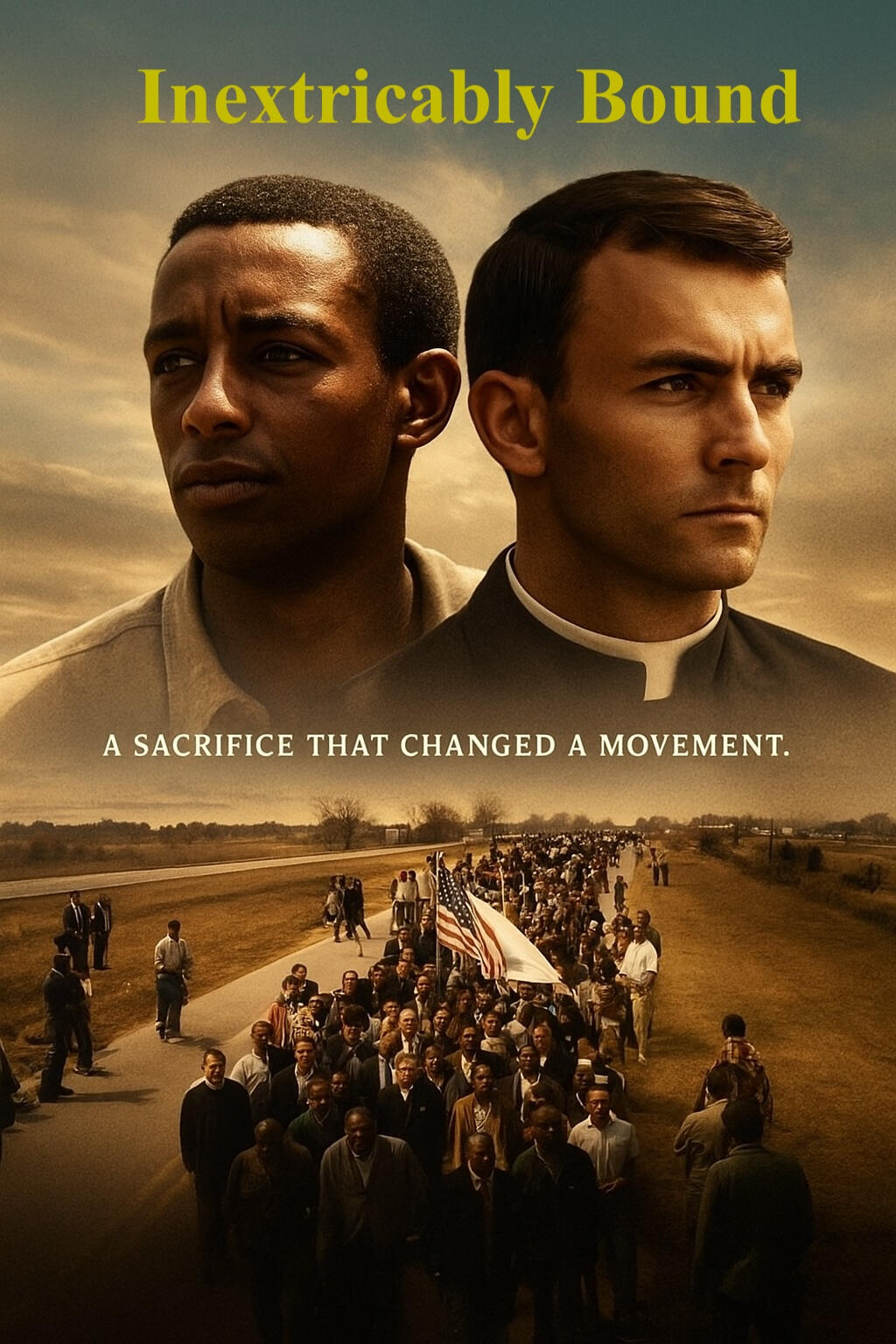
LOGLINEIn 1965 Alabama, SNCC organizer Stokely Carmichael fights to register Black voters while resisting a white Episcopal seminarian whose presence threatens to invite deadly retaliation. But when violence erupts, Stokely races to save the very man he tried to turn away—and confronts the limits of his own convictions.Based on a true story.FORMATFeature screenplay | Historical drama | 102 pages
Contained, actor-driven feature with restrained period scope.SEEKINGLiterary representation and producing partners.RIGHTS / SOURCE MATERIALSBased on documented public events and historical research. Rights and source materials available for discussion.RECOGNITIONScript Reader Pro — Recommend (Fall 2026)
Austin Film Festival — Second Rounder, Drama Feature (2026)
The Black List — Score: 8 (2025)
Finish Line — Semi-Finalist (2025)STRUCTURE & POINT OF VIEWInextricably Bound is not a traditional biopic.The film is structured as a moral memory. Stokely Carmichael, years later, looks back on the white seminarian he once mistrusted and on the Black-led Movement that transformed him.Jonathan does not arrive to lead the Movement. He arrives wanting to help, then learns that real allyship requires humility, listening, risk, and finally surrender.Ruby Sales, Naomi, Loretta, and the SNCC organizers are not background to Jonathan’s story. They are the world that changes him — and the people Stokely is trying to protect.The central question is not whether Jonathan can save anyone. It is whether Stokely can believe that Jonathan’s sacrifice meant something.SUMMARYInextricably Bound tells the true story of Jonathan Daniels, a young Episcopal seminarian who travels to Selma in 1965 hoping to help and instead finds himself transformed by the Black activists already risking everything to claim their dignity.Told through the eyes of Stokely Carmichael, whose skepticism of white allies slowly becomes something more complicated, the film reframes Jonathan’s story not as simple martyrdom, but as a lesson in humility, listening, faith, and cost. Jonathan forms close bonds with Ruby Sales, a brilliant teenage activist who understands the danger far more clearly than he does, and Naomi, whose courage and loss reveal the price paid by those who cannot simply leave the Movement behind.What begins as a march becomes a moral reckoning, culminating in Jonathan’s real-life act of sacrificial courage in Hayneville — and leaving Stokely to carry the meaning of that choice.
“The secret of life is to have no fear.” — Kwame TureWHY THIS FILM AND WHY NOW?Jonathan Daniels’ story is not distant history. It is a question we are being asked again.In January 2026, New Hampshire Episcopal Bishop Rob Hirschfeld invoked Jonathan Daniels while warning clergy to prepare for a time when faith may demand physical presence, danger, and sacrifice, not statements alone. His remarks sparked national debate and led Rachel Maddow to revisit Jonathan’s life and death on her program.Inextricably Bound does not ask audiences to admire the past. It asks them to recognize themselves in it: in the doubt, the fear, the hesitation, and the moments when doing the right thing no longer feels symbolic, but dangerous.The struggle for justice is not a chapter we have completed. It is a choice we are still making.WRITER BIOLowell Williams is a screenwriter and playwright whose work explores moral courage, faith, history, and the personal cost of justice. The screenplay grew out of his award-winning stage play Six Nights in the Black Belt (an O'Neill semifinalist) and reflects years of historical research and collaboration with artists connected to the story’s legacy. His stage play Sputnik, A Love Story is forthcoming from Next Stage Press.He holds an MFA in Creative Writing from Goddard College.COMPARABLE FILMSSelma — historical urgency and spiritual power, but on a more intimate, character-centered scale.
If Beale Street Could Talk — lyrical, human-centered storytelling rooted in interior life and emotional truth.
Judas and the Black Messiah — political organizing, ideological conflict, and the personal cost of resistance.
About Jonathan DanielsJonathan Myrick Daniels was a 26-year-old Episcopal seminarian from Keene, New Hampshire. In 1965, he answered Martin Luther King Jr.’s call to join the Civil Rights Movement in Selma, Alabama. After months of marches, arrests, and quiet acts of service, he was released from jail following a protest in Hayneville. Minutes later, he was shot and killed while shielding a teenage girl, Ruby Sales.His death shocked the nation and became one of the defining martyrdoms of the civil rights era. In 1991, the Episcopal Church recognized him as a modern martyr.
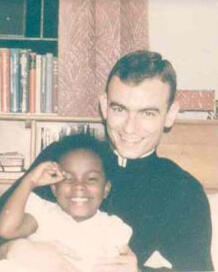
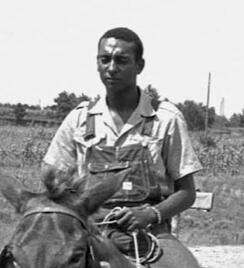
About Stokely CarmichaelIn 1965, Stokely Carmichael was a 23-year-old SNCC organizer — brilliant, razor-sharp, and beginning to question the limits of nonviolence. That summer, he formed an unlikely friendship with Jonathan Daniels, a young White seminarian whose quiet courage broke through Stokely’s deep skepticism. Jonathan’s death would become one of the moments that shaped Stokely’s evolving view of the Movement and of the sacrifices it demanded.
Casting Tone References -- Not Attached.
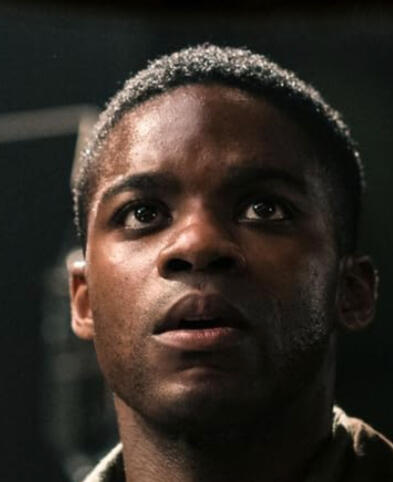
Jovan Adepo -- Stokely Carmichael

Lucas Hedges -- Jonathan Daniels
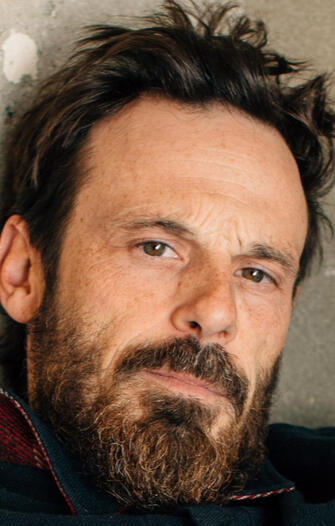
Scoot McNairy -- Father Charles Watkins

Shea Whigham -- Tom Hasham

Saniyya Sidney -- Ruby Sales
CONTACTLowell Williams
[email protected]Full screenplay available upon request.